Physical Address
304 North Cardinal St.
Dorchester Center, MA 02124

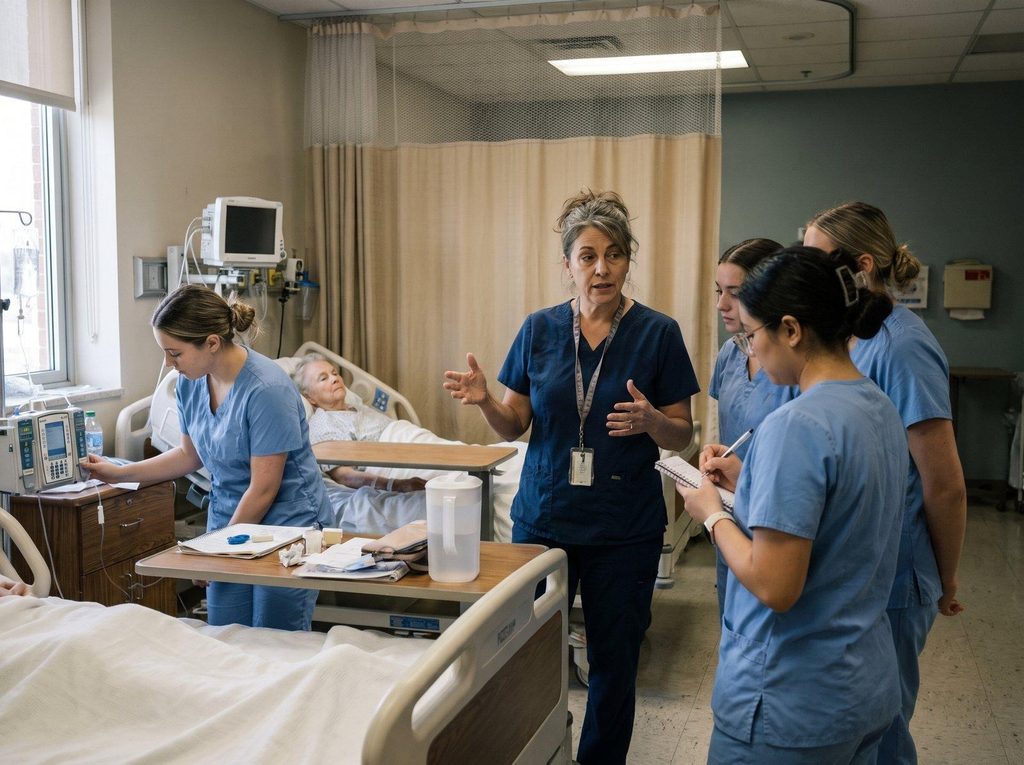
Interest in nursing is at a record high, and schools still can’t seat everyone who qualifies. In 2025, nursing programs in the United States turned away 93,176 qualified applications, according to the American Association of Colleges of Nursing (AACN). That’s up from 80,162 the year before.
Most conversations about the gap start with faculty, and faculty matter. But a student can’t graduate from lectures alone. Every program needs supervised hours at real facilities, with real preceptors, on real schedules. That capacity is harder to expand than a classroom, and it’s where many programs now hit their ceiling.

AACN’s survey of 998 schools names several reasons for turned-away applications: too few faculty, too few clinical sites and preceptors, limited classroom space, and budget cuts. Only one of those is fixed mainly by hiring or building. The clinical-site problem is fixed by coordination, and that’s where programs have the most room to act.
Coordination is also where the work piles up. A single cohort may need placements across medical-surgical, pediatrics, mental health, and community settings, each with its own site rules and start dates. Programs that want to grow without adding administrative headcount increasingly look for a student placement solution that keeps sites, shifts, and compliance records in one system rather than in a dozen inboxes.
The demand side isn’t slowing. AACN’s 2025 data shows entry-level BSN enrollment rising 7.6% to 283,303 students, the third straight annual increase, while entry-level BSN applications grew 17.1%. One caveat: the 93,176 figure counts applications, not unique people, since one applicant can apply to several schools. The pressure is real, but it’s not quite 93,000 individual students.
Ask a placement coordinator what slows them down and the answer is rarely one big thing. It’s the small stuff, repeated hundreds of times a term.
Affiliation agreements expire quietly. Immunization records and background checks live in separate files. A preceptor agrees to take a student, then a unit’s staffing changes and the offer disappears. Hours get logged on paper and reconciled weeks later, when a student is already short of a graduation requirement.
Physical site capacity and preceptor capacity are also different numbers. A hospital may have beds and units to spare but too few nurses willing, or released from duties, to precept. Programs that track only the first number overestimate what they can place. Our overview of patient safety and system design makes a related point: most errors trace back to process, not people. Placement works the same way. When a student shows up without a verified credential, the failure is in the system, not the student.
Clinical placements and faculty shortages feed each other. AACN’s October 2025 vacancy survey of 863 schools found 1,588 full-time faculty vacancies, a 7.2% vacancy rate. The AACN nursing fact sheet lays out the broader capacity picture behind those numbers.
Clinical instructors are part of that strain. Each one supervises a limited group of students, so every open instructor line shrinks the number of students a program can send into the field at once. A program with plenty of sites but too few instructors has the same ceiling as one with the reverse problem. Fixing only one side just moves the constraint to the other.
Simulation labs are a useful release valve. They let students practice high-risk skills, repeat scenarios, and make mistakes where no patient is harmed. Many programs have expanded them for exactly that reason.
But simulation supplements clinical time; it doesn’t replace what students get from a real unit. Reading a chart that’s incomplete, working beside a tired preceptor, and handling a family’s questions can’t be fully scripted. Our look at how nursing training shapes performance under pressure shows why: judgment under stress comes from exposure to real stress. Programs should treat simulation as a way to prepare students for placements, not as a way to avoid them.
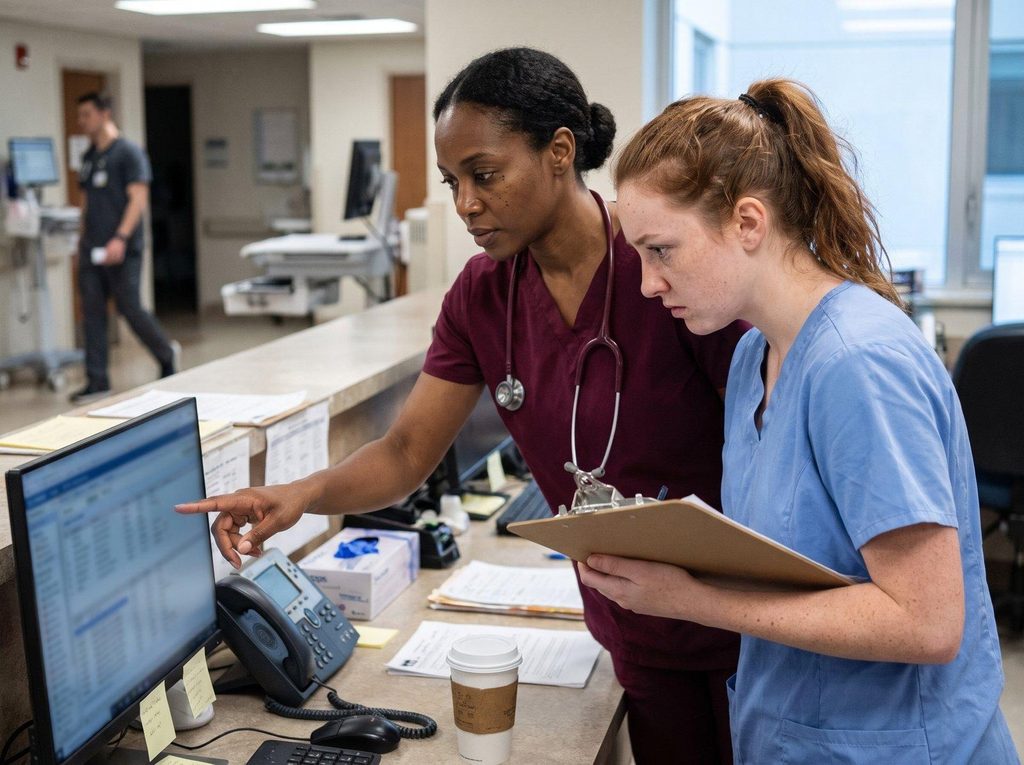
Programs can’t fix the faculty pipeline in a single term. They can fix how they run placements. A process that holds up tends to include these steps:
Preceptor relationships carry the most weight in that list. Students who feel supported by their preceptor learn faster and cope better with pressure, which is the point of our piece on emotional stability and patient focus. Administrative work that frees coordinators to maintain those relationships isn’t overhead; it protects the part of clinical education that works.
Placement capacity looks like a supply problem, but much of it is an operations problem, and operations are something programs control. Faculty hiring and funding will take years. A cleaner process for sourcing sites, protecting preceptor time, and tracking compliance can open seats this year.
Schools that treat placements as a managed system, with clear data on demand, capacity, and hours, will place more of the students they already admit. In a year when tens of thousands of qualified applications went unfilled, that’s worth the effort.
