Physical Address
304 North Cardinal St.
Dorchester Center, MA 02124

Electrolyte abnormalities are common in emergency medicine and can vary greatly in importance, severity, and symptoms. Asymptomatic electrolyte abnormalities can be gradually corrected, whereas those causing alterations in consciousness or life-threatening dysrhythmias require immediate therapy to avoid permanent sequelae or death. In some cases, therapy for life-threatening electrolyte disorders may precede laboratory confirmation.
Asymptomatic electrolyte abnormalities can usually be corrected slowly, but those that cause profound mental status changes or life-threatening arrhythmias require immediate correction to avoid cardiac arrest or seizures.
IV calcium should be used only for hyperkalemic emergencies, defined as the following: widening QRS; sine wave; bradycardias and cardiac arrest believed to be due to hyperkalemia; or rapidly evolving electrocardiographic changes, from normal to development of tall peaked T waves and loss of the P wave. Acute, rapid rises in serum potassium concentration are rare but may be seen in tumor lysis syndrome, rhabdomyolysis, or massive hemolysis.
After the critical decision about administration of calcium has been made, a beta 2 -agonist, insulin and glucose, normal saline, and bicarbonate (if the patient is acidotic) can be given to shift potassium intracellularly.
When treating hypokalemia, the physician should also replace magnesium sulfate, in addition to potassium, or the patient will excrete most of the infused potassium in the urine.
Low serum potassium levels reflect a substantial total potassium deficit; correction of large deficits can require several days.
Hypertonic saline should be reserved for severely hyponatremic patients (typically in the 100 to 110 mEq/L range) who present with coma, seizures, or focal neurologic deficits. Central pontine myelinolysis can occur if serum sodium concentration is raised rapidly by more than 8 mEq/day.
Hyperkalemia, defined as a serum potassium level greater than 5.0 mEq/L, is the most dangerous acute electrolyte abnormality, potentially leading to life-threatening arrhythmias and death. Although hyperkalemia may have vague and varied symptoms, it is usually totally asymptomatic and can present with cardiac arrest as its first “symptom.” Serum potassium concentration is normally between 3.5 and 5.0 mEq/L and is tightly regulated by the kidneys. Hyperkalemia usually develops from impaired renal excretion or intracellular release; however, in advanced chronic kidney disease or end-stage renal disease, dietary intake of potassium may be a significant factor in its development. Risk factors for hyperkalemia include impaired potassium excretion, such as dehydration and renal failure, as well as medications that cause potassium retention. Evaluation of the 12-lead electrocardiogram (ECG) of patients at risk for this electrolyte disturbance guides management decisions. Hyperkalemia can be rapidly progressive, requiring lifesaving interventions at the earliest suspicion of toxicity.
Hyperkalemia causes cardiotoxicity by increasing the resting membrane potential of the cardiac myocyte, causing “membrane excitability,” and conversely, sluggish depolarization, as well as decreased duration of repolarization. At very high levels, potassium causes the depolarization threshold to rise, leading to overall depressed cardiac function. Nearly any cardiac arrhythmia can be seen with hyperkalemia, including heart blocks, bradydysrhythmias, pseudoinfarction, ST-segment elevation, Brugada pattern, and the classic “sine wave” pattern. As hyperkalemia advances, the end result is cardiac arrest, usually from deterioration into ventricular fibrillation, pulseless electrical activity, or asystole. A serum potassium level of 10.0 mEq/L is usually fatal, but decompensation and death can occur at any level above 7 to 8 mEq/L.
Hyperkalemia is a difficult diagnosis to make on clinical grounds alone. Hyperkalemia is classified as mild (K 5.5 to 6.0), moderate (K 6.1 to 6.9) or severe (K >7.0). Patients with mild to moderate hyperkalemia are often identified during routine blood sampling for an unrelated condition. Patients with moderate to severe hyperkalemia may have gastrointestinal effects, such as nausea, vomiting, and diarrhea, which are often associated with their underlying disease. Patients with severe hyperkalemia may present with neuromuscular findings, including muscle cramps, generalized weakness, paresthesias, tetany, and focal or global paralysis. The signs and symptoms of progressive muscle weakness, paresthesias, dyspnea, and depressed deep tendon reflexes are neither sensitive nor specific, nor do they appear reliably with a particular serum potassium level. Patients with severe hyperkalemia may present with hemodynamic instability and cardiac arrhythmias requiring immediate intervention.
The most common cause of hyperkalemia is spurious elevation due to hemolysis during or after the blood draw. Thus, an ECG should be used to assess for true hyperkalemia while another sample is analyzed. Box 114.1 organizes the most common causes of hyperkalemia. The presence of one of these conditions may be the lone historical clue in hyperkalemia. Physicians should not rely solely on an ECG to determine the presence or absence of hyperkalemia in an otherwise stable patient.
Spurious elevation: Hemolysis due to drawing or storing of the laboratory sample or post–blood sampling leak from markedly elevated white blood cells, red blood cells, or platelets
Renal failure: Acute or chronic
Acidosis: Diabetic ketoacidosis (DKA), Addison disease, adrenal insufficiency, type 4 renal tubular acidosis
Cell death: Rhabdomyolysis, tumor lysis syndrome, massive hemolysis or transfusion, crush injury, burn
Drugs: Acute digitalis overdose, succinylcholine, angiotensin-converting enzyme inhibitors, angiotensin receptor blockers, nonsteroidal antiinflammatory drugs (NSAIDs), spironolactone, amiloride, potassium supplementation
The ECG is helpful in making the diagnosis of hyperkalemia and can be used in unstable patients to initiate treatment ( Figs. 114.1 to 114.3 ). Classic electrocardiographic changes—the peaked T wave, flattened p wave with prolonged PR interval or a totally absent P wave, wide QRS, and sine wave pattern, portending imminent cardiac arrest—have been well described as appearing sequentially with rising serum potassium levels. Peaked T waves usually appear as serum potassium levels exceed 5.5 to 6.5 mEq/L; P wave disappearance and PR prolongation are common with levels above 6.5 to 7.5 mEq/L; and levels above 7.0 to 8.0 mEq/L can result in QRS prolongation. Although these changes may occur in only half the patients, recognition of these patterns is vital to rapid diagnosis and initiation of lifesaving treatment. A serum potassium level above 5.0 mEq/L is diagnostic of hyperkalemia, but the value itself does not always predict electrocardiographic changes or the degree of cardiotoxicity. Furthermore, stable patients who are otherwise unlikely to have elevated potassium should not be presumptively treated for hyperkalemia based on subtle electrocardiographic changes alone. In addition, hyperkalemia may present as an atropine-resistant bradycardia, with or without apparent heart block.

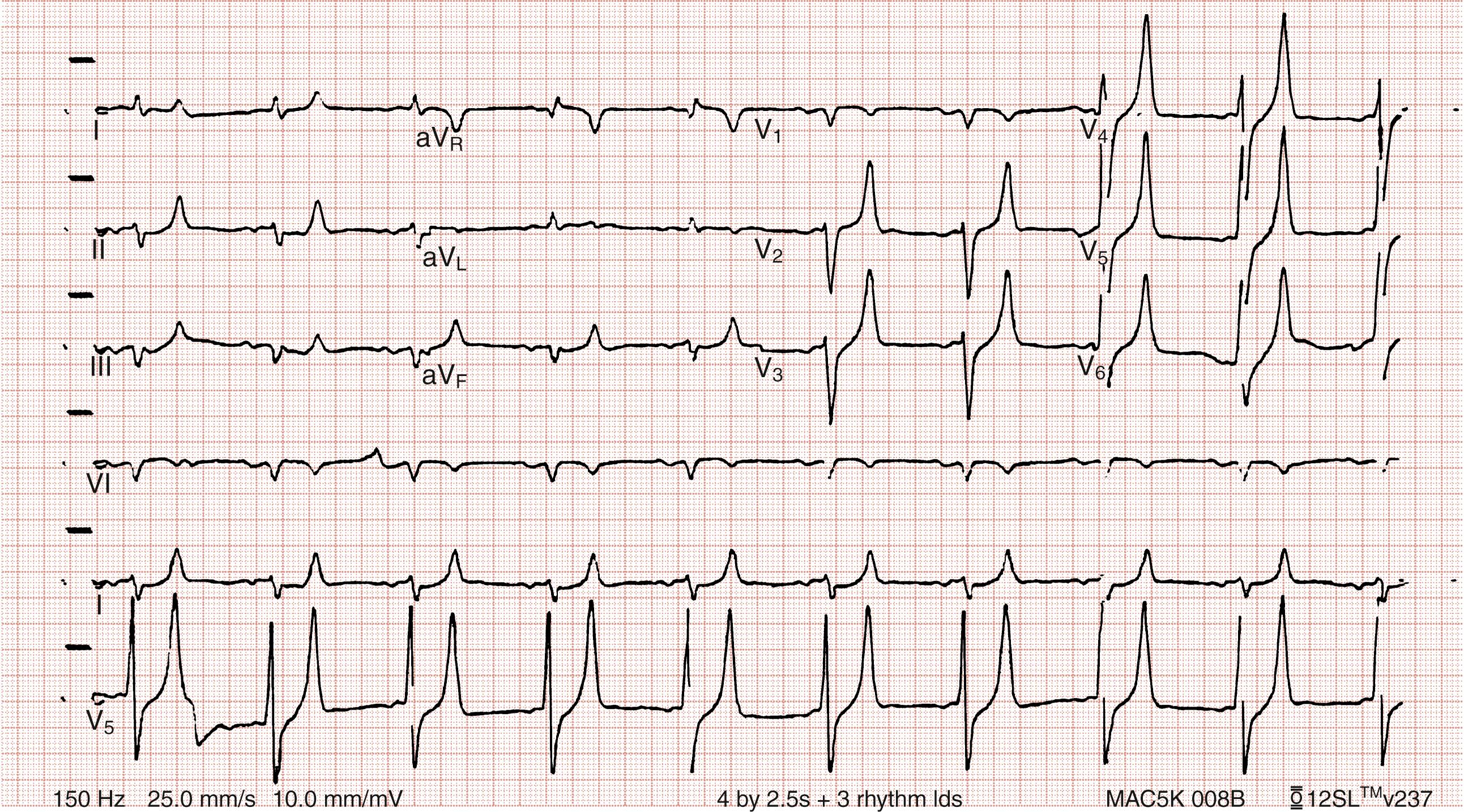

Patients with suspected or known hyperkalemia should have intravenous (IV) access and continuous cardiac monitoring. Treatment of hyperkalemia should be directed by the clinical scenario combined with the ECG and laboratory potassium value, and consists of three main steps: (1) stabilization of the cardiac membrane, (2) shifting of potassium into the cells, and (3) removal of potassium from the body. A variety of treatment options are considered for the acute management of hyperkalemia, including calcium, insulin, beta 2 -adrenergic agonists, sodium bicarbonate, resins, and dialysis ( Table 114.1 ).
| Treatment | Medication | Features |
|---|---|---|
| Stabilize cardiac membrane | Calcium chloride 1 g or calcium gluconate IV 2 g | For wide QRS, restores the electrical gradient; does not decrease serum potassium Onset within minutes; lasts 30 to 60 minutes |
| Shift potassium into cells | Regular insulin, 10 units, IV push, combined with 100 mL of 50% dextrose, IV push; 5 units IV insulin if renal dysfunction to avoid hypolgycemia High-dose nebulized albuterol by face mask (10 to 15 mg by continuous inhalation) Bicarbonate 50 to 100 mL Normal saline 100 to 250 mL |
Insulin: Onset <15 minutes; maximum effect 30 to 60 minutes (≈0.6 mEq/L decrease) Nebulized albuterol: Onset <15 minutes (0.5 to 1 mEq/L decrease) If severely acidotic In conjunction with nephrologist if dialysis dependent |
| Remove potassium from the body | Hemodialysis Normal saline and furosemide Ion exchange resin |
Emergently in cardiac arrest, urgently in renal failure; may delay if renal function is normal In patients with rhabdomyolysis or tumor lysis syndrome with intact urine output, not effective acutely |
IV calcium stabilizes the cardiac membrane by restoring the electrical gradient. Calcium increases the depolarization threshold and the calcium gradient across the cardiac membrane, quieting myocyte excitability and increasing cardiac conduction speed, thus narrowing the QRS. Calcium does not decrease serum potassium levels, and its effect is rapid (within 1 to 3 minutes), but transient (30 to 60 minutes or less). The dose is one ampule, or 10 mL of 10% calcium chloride solution. Calcium chloride is preferably administered through a central venous line due to the risk of tissue necrosis should it extravasate at the injection site. More than 10 mL of calcium gluconate will often be required, because it contains only one-third the calcium contained in calcium chloride. Calcium gluconate is preferred in pediatric cases, as well as in patients with less emergent (i.e., more chronic) hyperkalemic patients, when a slow infusion is desired or when only a smaller peripheral vein is available for administration.
Beta 2 -agonists, insulin, saline, and potentially sodium bicarbonate shift potassium intracellularly. Insulin is the most reliable agent to move potassium into cells, but beta 2 -adrenergic receptor agonists also provide benefit in some patients. Insulin, given IV in combination with glucose to prevent hypoglycemia, also shifts potassium into cells by stimulation of the sodium-potassium adenosine triphosphatase (Na + , K + -ATPase) pump. The onset of action is less than 15 minutes, and the effect is maximal between 30 and 60 minutes, with a maximal drop of 0.6 mEq/L on average. Clinicians should follow glucose levels closely for hours post-therapy with glucose and insulin.
Nebulized albuterol is effective in shifting potassium into cells by stimulation of the Na + , K + -ATPase pump. Nebulized albuterol begins to take measurable effect after 15 minutes and lowers the serum potassium level by 0.5 to 1 mEq/L, depending on the dose. The effective dose is at least four times higher than that typically used for bronchodilation. The combination of nebulized albuterol and insulin with glucose appears to be additive, lowering serum potassium, on average, by 1.2 mEq/L.
Saline infusions also stimulate the Na + , K + -ATPase pump; only a few hundred milliliters are required for beneficial effects. Saline infusions should be given judiciously in anuric patients and in consultation with a nephrologist. Sodium bicarbonate is effective in hyperkalemic patients who are acidotic and has no benefit when used for hyperkalemia in non-acidotic patients. Sodium bicarbonate buffers hydrogen ions extracellularly while shifting potassium intracellularly, but it should be used in combination with other treatment options and reserved for patients with confirmed acidosis.
Hemodialysis effectively and reliably decreases serum potassium levels by at least 1 mEq/L in the first hour and another 1 mEq/L during the next 2 hours. It is the only reliable method of potassium removal that has been experimentally studied and should be instituted early to treat life-threatening hyperkalemia in patients with renal failure. In patients with intact renal function, medical management alone is usually sufficient, even in extreme cases, and hemodialysis may not be necessary unless multiple medical modalities fail. There are no randomized trials addressing the use of diuretics (e.g., furosemide) in the emergent management of hyperkalemia. In cases such as rhabdomyolysis or tumor lysis syndrome, it may be appropriate to use a normal saline infusion supplemented by furosemide to enhance diuresis and urinary potassium excretion. Sodium polystyrene sulfonate (Kayexalate), does not decrease the serum potassium level within the first 4 hours of treatment, is not effective in the acute management of hyperkalemia, and may cause serious adverse gastrointestinal effects.
Control of hyperkalemia in patients with chronic kidney disease and in those with heart failure continues to be difficult. However, two oral medications, patiromer and sodium zirconium cyclosilicate, have shown clinical promise in ongoing trials to lower serum potassium levels. , Zirconium is a highly selective cation exchanger that entraps potassium in theintestinal tract in exchange for sodium and hydrogen. Hypokalemia is often seen in association with hypomagnesemia, and patients with low serum potassium levels should be assumed to be hypomagnesemic also.
Hypokalemia is the most common electrolyte abnormality encountered in clinical practice. More than 20% of hospitalized patients and up to 40% of outpatients on thiazide diuretics have potassium values less than 3.5 mEq/L. Moderate hypokalemia is a serum level of 2.5 to 3 mEq/L; severe hypokalemia is defined as a level less than 2.5 mEq/L. Although hypokalemia is usually asymptomatic, due to potassium’s effect on the heart and muscle, very low levels can result in severe cardiac dysrhythmias or rhabdomyolysis, respectively. , Hypokalemia is often seen in association with hypomagnesemia, and patients with low serum potassium levels should be assumed to be hypomagnesemic as well.
Hypokalemia is usually asymptomatic but can present with nonspecific complaints, primarily weakness and muscle pain. Although short periods of mild potassium depletion are typically well-tolerated in healthy individuals, severe potassium depletion can result in serious cardiovascular instability, neurologic dysfunction, glucose intolerance, gastrointestinal symptoms, and renal failure, as well as affect the acid-base balance in the body. The likelihood of symptoms appears to correlate with the rapidity of the decrease in serum potassium.
In patients without underlying heart disease, abnormalities in cardiac conduction are extremely unusual, even when the serum potassium concentration is below 3.0 mEq/L. Paresthesias, depressed deep tendon reflexes, fasciculations, muscle weakness, and confusion can occur when the serum potassium level is less than 2.5 mEq/L. However, in patients with cardiac ischemia or heart failure, even mild to moderate hypokalemia increases the likelihood of cardiac arrhythmias secondary to potassium’s effect on the action potential. Hypokalemia is an independent risk factor contributing to reduced survival of cardiac patients and increased incidence of arrhythmic death. Based on available evidence, serum potassium concentrations should be maintained above 4.5 mEq/L in patients having an acute myocardial infarction. Hypokalemic patients can demonstrate first- and second-degree heart block, atrial fibrillation, ventricular fibrillation, and asystole. Life-threatening cardiac arrhythmias are managed by restoration of serum potassium levels into the normal range. Thyrotoxic periodic paralysis is a rare disorder characterized by acute hypokalemia and muscle weakness. It is usually seen in patients of Asian descent and is potentially fatal when involvement includes respiratory muscles.
The five most common causes of hypokalemia are renal losses, increased nonrenal losses, decreased potassium intake, intracellular shift, and endocrine etiologies ( Box 114.2 ). Increased excretion of potassium, especially coupled with poor intake, is the most common cause of hypokalemia, and patients receiving diuretics represent the single most common patient group encountered in clinical practice. Thiazide diuretics are more likely than loop or osmotic diuretics to cause hypokalemia, but both the thiazide and loop diuretics block chloride-associated sodium and increase delivery of sodium to the collecting tubules. Hypokalemia is a common adverse effect of treatment with diuretics and may cause fatal arrhythmias and increase the risk of digitalis toxicity. In addition to diuretics, other drugs and disorders can cause significant renal potassium losses, including hyperaldosteronism, steroid excess, metabolic acidosis, DKA, renal tubular acidosis, and alcohol consumption. When given in large doses, penicillin and its synthetic derivatives promote renal potassium excretion by increasing sodium delivery to the distal nephron. Individuals with secondary hyperaldosteronism, whether due to congestive heart failure (CHF), hepatic insufficiency, or nephrotic syndrome, may also exhibit hypokalemia. Patients with renal tubular acidosis can become hypokalemic, because a defect in the distal tubule leads to increased potassium excretion.
Renal losses: Diuretic use, drugs, steroid use, metabolic acidosis, hyperaldosteronism, renal tubular acidosis, diabetic ketoacidosis (DKA), alcohol consumption
Increased nonrenal losses: Sweating, diarrhea, vomiting, laxative use
Decreased intake: Ethanol, malnutrition
Intracellular shift: Hyperventilation, metabolic alkalosis, drugs
Endocrine: Cushing disease, Bartter syndrome, insulin therapy
Administration of insulin may reduce serum potassium because of insulin’s ability to stimulate the Na + , K + -ATPase pump and move potassium intracellularly; hypokalemia can be a dangerous complication with intentional overdoses of insulin or during treatment of DKA. Although most patients with DKA present with high-normal or mildly elevated serum potassium levels, patients are usually 2 to 3 mEq/kg deficient in total body potassium. To avoid hypokalemic arrhythmias or cardiac arrest from hypokalemia, a potassium infusion should be started once significant hyperkalemia has been ruled out and intact renal function confirmed.
Hypokalemia can also occur from gastrointestinal and dermal losses. In diarrheal states, large quantities of potassium can be lost in the stool, with consequent secondary hyperaldosteronism. Large doses of laxatives and repeated enemas also cause excessive potassium loss in the stool. Although hypokalemia is often seen after protracted vomiting or nasogastric suctions, only 5 to 10 mEq/L of potassium is lost in gastric fluid. Hypokalemia in this setting is secondary to metabolic alkalosis, chloride losses, and hyperaldosteronism. On occasion, excessive sweating can lead to hypokalemia from potassium losses through the skin. Patients with extensive burns can also suffer from hypokalemia because of significant skin losses. Dietary potassium deficiency should be considered in the severely malnourished patient or chronic alcoholic. Poor potassium intake combined with increased nonrenal losses can result in severe hypokalemia.
Hypokalemia can also result from an acute shift of potassium from the extracellular compartment into cells, most commonly in patients with metabolic alkalosis or hyperventilation, and in patients taking medications such as beta-agonists or decongestants. Stimulation of beta-receptors can lead to hypokalemia, especially in patients using repetitive and high doses of beta-agonists for chronic obstructive pulmonary disease or asthma. A standard dose of nebulized albuterol reduces serum potassium by 0.2 to 0.4 mEq/L, and a second dose taken within 1 hour can reduce it by almost 1 mEq/L. Patients with starvation or near-starvation may develop hypokalemia when fed, because insulin secretion and increased cellular uptake can cause an acute exaggerated intracellular migration of potassium.
Hypokalemia is rarely diagnosed on clinical presentation alone and is typically made by measurement of the serum potassium concentration during routine laboratory studies. If there is any suspicion for hypokalemia or a patient presents with generalized weakness, palpitations, or arrhythmias, an ECG should be obtained. Just as tall-peaked T waves are characteristic of hyperkalemia, flattened T waves can be seen in hypokalemia. Hypokalemia may produce U waves, which are small deflections after the T wave ( Figs. 114.4 and 114.5 ). Hypokalemia may also cause a dangerously prolonged QT interval. Although there is no threshold of QT prolongation at which torsades de pointes is certain to occur, once the QT interval becomes longer than 500 milliseconds, the risk of torsades de pointes increases twofold to threefold. Hypokalemia is also notorious for causing nonspecific ST and T wave changes. In addition, prolonged potassium depletion of even a modest proportion can provoke or exacerbate kidney injury or hypertension. A severe degree of hypokalemia with paralysis is a potentially life-threatening medical emergency and may be seen as levels drop below 2.0 mEq/L.


Because potassium is an intracellular cation; a low serum potassium level almost always reflects a significant total body potassium deficit; each 0.3 mEq potassium drop below normal correlates with an approximately 100 mEq total body deficit. In the absence of nausea or vomiting as the cause of hypokalemia, patients with mild or moderate hypokalemia may only need oral potassium replacement therapy. Oral replacement is available in liquid, powder, and tablet form. Potassium chloride is the most commonly used supplementation, and 40 to 60 mEq orally every 2 to 4 hours is typically well tolerated. If the cause of hypokalemia is not clear, or the hypokalemia is severe and associated with profound weakness, obtain a spot urine potassium level before starting therapy to assess whether the patient’s kidneys are inappropriately wasting potassium from a renal or endocrine cause. Although a 24-hour serum is more accurate, a urinary potassium above 13 mEq/L per gram of creatinine is indicative of inappropriate renal potassium loses. Treatment of hypokalemia is essential in multiple populations of patients. Hypokalemia is arrhythmogenic, especially in the settings of acute myocardial infarction, high catecholamine states, and hypertrophied or dilated ventricles. Hypokalemia is an important independent risk factor for morbidity and mortality in patients with heart failure, requiring serum potassium levels to between 4.0 and 5.0 mEq/L in this population.
If IV infusion is necessary, potassium chloride can be safely given at a rate of 10 to 20 mEq/hr. In the rare instance when IV repletion is planned at more than 20 mEq/hr, such as for levels below 2.0 mEq/L or QT interval greater than 500 milliseconds, the patient should have continuous cardiac monitoring and central line access established.
Hypokalemia is associated with hypomagnesemia, and the severity of the hypokalemia correlates with a similar degree of hypomagnesemia. Magnesium replacement should usually accompany potassium repletion. Unless the patient receives at least 0.5 g/hr of magnesium sulfate along with potassium replacement, potassium will not move intracellularly and the patient will lose potassium through excretion. Correction of large potassium deficits may require several days, with simultaneous oral and IV replacement.
Patients with mild hypokalemia, above 3.5 mEq/dl without any ECG changes can usually be discharged home with very close outpatient follow-up for a potassium recheck in a week. Hypokalemia due to diuretic therapy requires either increased potassium intake, the addition of a potassium sparing agent or switching the patient to a combined thiazide and potassium sparing diuretic.
Once the patient is discharged, if increased potassium intake is desired, then oral potassium repletion is best accomplished by encouraging the ingestion of potassium and magnesium-rich foods such as potatoes, avocado, black beans, tomatoes, and bananas.
Patients in whom the underlying cause of their hypokalemia cannot be successfully treated such as refractory nausea and vomiting require admission. Patients cannot be discharged until their potassium level is above 3.0 mEq/dl, they can tolerate food and liquids, and they have a QT interval of less than 500 msec.
Hypernatremia is defined as a serum sodium concentration above 145 mEq/L. It is rarely seen in previously healthy patients and usually portends a poor prognosis. Most hypernatremic patients have either an impaired sense of thirst or no access to water: elders, infants, patients with mental impairment, and those who are intubated and paralyzed are at highest risk for this disorder. Hypernatremia can be divided into three physiologic pairings: (1) hypernatremia with dehydration and low total body sodium, (2) hypernatremia with low total body water and normal total body sodium, and (3) hypernatremia with increased total body sodium ( Box 114.3 ). Diabetes insipidus, an insufficient production of (or lack of response to) antidiuretic hormone, can lead to life-threatening hypernatremia ( Box 114.4 ).
Heatstroke
Increased insensible losses: Burns, sweating
Gastrointestinal loss: Diarrhea, protracted vomiting, continuous gastrointestinal suction
Osmotic diuresis: Glucose, mannitol, enteral feeding
Diabetes insipidus
Neurogenic
Elderly with “reset” osmostat
Hypothalamic dysfunction
Suprasellar or infrasellar tumors
Renal disease
Drugs (amphotericin, phenytoin, lithium, aminoglycosides, methoxyflurane)
Sickle cell disease
Salt tablet ingestion
Salt water ingestion
Saline infusions
Saline enemas
IV sodium bicarbonate
Poorly diluted interval feedings
Primary hyperaldosteronism
Hemodialysis
Cushing syndrome
Conn syndrome
Idiopathic
Familial disease
Cancer
Hypoxic encephalopathy
Infiltrative disorders
Post supraventricular tachycardia
Anorexia nervosa
Chronic renal insufficiency
Polycystic kidney disease
Lithium toxicity
Hypercalcemia
Hypokalemia
Tubulointerstitial disease
Hereditary
Sickle cell disease
Patients often have multiple causes of severe hypernatremia. Hypernatremia in adults is almost exclusively due to a free water deficit and should be considered in any patient presenting with altered mental status, as well as in bed-ridden patients with no access to water. Patients with impaired antidiuretic hormone function may complain of polyuria or polydipsia. Others may have obvious causes of extrarenal fluid losses, while some may have no complaints at all.
In addition to routine serum chemistries, serum osmolarity and urine sodium concentration and osmolality should be obtained. The degree of hypernatremia almost always equals the total body water (TBW) deficit in adults. The patient’s TBW deficit can be estimated by the formula
A patient’s TBW is calculated by multiplying the patient’s body weight in kilograms times 0.6. However, because of differences in the percentages of body fat, based on the age and sex of the patient, it is more accurate to use the correction factors listed in Table 114.2 .
| Population | Total Body Water |
|---|---|
| Children and adult men | Body weight (kg) × 0.6 |
| Adult women | Body weight (kg) × 0.5 |
| Elderly men | Body weight (kg) × 0.5 |
| Elderly women | Body weight (kg) × 0.45 |
The treatment of hypernatremia has three interdependent goals: first, to quickly correct underlying shock, hypoperfusion, or significant hypovolemia with normal saline; second, to treat the underlying cause of hypernatremia, such as fever, vomiting, or diabetes insipidus; and third, to carefully lower the serum sodium level, usually by replacement of the body’s total water deficit. , Until hypoperfusion and hypovolemia are corrected, homeostatic mechanisms for sodium balance promote sodium resorption to maintain intravascular volume, even at the expense of the serum sodium concentration.
The rate of correction in hypernatremia is extremely important to minimize morbidity and mortality. Both too quick and too slow correction speeds are associated with an increased risk of death, regardless of the initial sodium level. , In adult patients who develop hypernatremia over a short time due to sodium loading, “rapid correction” at a rate of at least 1 mEq/hr decrease in serum sodium appears relatively safe. , However, most adult patients develop hypernatremia over days to weeks. In this group of patients, serum sodium concentration should be corrected slowly, at no more than 0.5 mEq/hr or 10 to 12 mEq/day.
Normal saline should be started for volume replacement until the patient is hemodynamically stable, and then changed to half-normal saline at 100 mL/hr once vital signs have normalized. The treatment of central diabetes insipidus with desmopressin (DDAVP) is an effective means of improving polyuria and hypernatremia; initial doses in the acute setting range from 1 to 2 μg.
The disposition is based on the patient’s underlying etiology and severity of the hypernatremia. Almost all hypernatremic patients require hospitalization due to their dehydrated status and underlying comorbidities. Most of the time these patients have a free water deficit with a low chance of dangerous overcorrection. In mild cases, increasing water intake at home can restore the proper sodium balance.
Hyponatremia, defined as serum sodium concentration of less than 135 mEq/L, is the second most common electrolyte abnormality encountered in clinical practice and can be a marker of underlying disease. The most common causes of severe hyponatremia in adults are therapy with thiazides, the postoperative state, the syndrome of inappropriate secretion of antidiuretic hormone (SIADH), psychogenic polydipsia, exercise-associated hyponatremia, and unintentional water intoxication. Gastrointestinal fluid loss, ingestion of overly dilute formula, accidental ingestion of excessive water, and receipt of multiple tap water enemas are the main causes of severe hyponatremia in infants and children. Most patients presenting to the emergency department (ED) with hyponatremia are asymptomatic and do not require emergent therapy. If symptoms are present, they are typically based on the degree of hyponatremia and how acutely the hyponatremia developed. Symptoms range from headache, nausea, and vomiting to confusion, seizures, and coma. There are two groups of hyponatremic patients that require treatment with either normal saline or hypertonic saline: (1) severe but asymptomatic hyponatremia with a sodium level of 110 mEq/L or less and (2) acute symptomatic hyponatremia with a sodium level below 120 mEq/L.
Central nervous system (CNS) damage due to hyponatremia may be caused by cerebral edema and increased intracranial pressure, by osmotic fluid shifts during overly aggressive treatment, or by both. When neurons are subjected to a hyponatremic environment, they become depleted of sodium and potassium in an attempt to limit their own osmolarity to prevent intracellular fluid shifts that would lead to cerebral edema. If fluid therapy raises extracellular sodium levels too quickly, fluids shift out of neurons and can cause diffuse demyelination. This can result in a flaccid paralysis and death due to central pontine myelinolysis, a syndrome more accurately labeled as the osmotic demyelinating syndrome (ODS). ,
Causes of hyponatremia fall into four general categories: pseudohyponatremia, hyponatremia with dehydration and decreased extracellular volume, hyponatremia with increased extracellular volume, and euvolemic hyponatremia with increased TBW ( Box 114.5 ).
Hyperlipidemia
Hyperproteinemia (multiple myeloma, macroglobulinemia)
Hyperglycemia
Body fluid losses: Sweating, vomiting, diarrhea, gastrointestinal suction
Third spacing: Bowel obstruction, burns, pancreatitis, rhabdomyolysis
Renal causes: Diuretics, mineralocorticoid deficiency, osmotic diuresis, renal tubular acidosis, salt-wasting nephropathies
Heart failure
Chronic renal failure
Hepatic failure or cirrhosis
SIADH
Drugs causing SIADH (diuretics, barbiturates, carbamazepine, chlorpropamide, clofibrate, opioids, tolbutamide, vincristine)
Psychogenic polydipsia
Beer potomania
Hypothyroidism
Adrenal insufficiency
MDMA (ecstasy)
Accidental or intentional water intoxication
Pseudohyponatremia is a falsely low sodium reading caused by the presence of other osmolar particles in the serum. The phenomenon of pseudohyponatremia is explained by the increased percentage of large molecular particles that do not contribute to plasma osmolality relative to sodium. Severe hypertriglyceridemia and hyperproteinemia are two common causes of this condition. Blood draw or laboratory error should also be considered as a possible cause of hyponatremia, especially if the blood sample was drawn near an infusion site using 5% dextrose in water (D 5 W) when a very abnormal sodium level is reported in an otherwise healthy patient.
Hyperglycemia is sometimes considered a cause of pseudohyponatremia; however, it causes a dilutional hyponatremia by pulling water into the vascular space through osmosis. In true pseudohyponatremia, serum osmolality is normal and no shifts of water occur. Two different formulas based on the degree of a patient’s hyperglycemia are currently used to correct serum sodium levels. The most recommended formula advocates for the addition of 1.6 mEq/L to the measured sodium for every 100 mg/dL of glucose above 100. However, another acceptable formula recommends using this 1.6 mEq/dl only for the first 400 mg rise in glucose and then using 2.4 mEqs for each additional 100 mg/dl rise in glucose. Either formula is acceptable to use, the key concept being that as glucose levels rise significantly, a “normal” and not as lowered serum sodium is distinctly abnormal.
Hypovolemic hyponatremia, or hyponatremia with dehydration, occurs when there is decreased extracellular volume combined with an even greater loss of sodium. Hyponatremia secondary to body fluid losses should be differentiated from that due to renal losses. Hyponatremia with dehydration due to body fluid losses includes sweating, vomiting, diarrhea, and gastrointestinal suction. Hypovolemic hyponatremia is also seen with “third spacing” in bowel obstruction, burns, and intra-abdominal sepsis. Hypovolemic hyponatremia due to renal causes includes diuretic use, mineralocorticoid deficiency, renal tubular acidosis, and salt-wasting nephropathy. Hypovolemic hyponatremia can be further exacerbated when fluid losses are replaced with hypotonic saline.
Hypervolemic hyponatremia, or hyponatremia with increased extracellular volume, occurs when sodium and water are retained, but water retention exceeds sodium retention. Most of these patients present with edema. Hyponatremia with increased total body sodium occurs in patients with heart failure, chronic renal failure, and hepatic failure. , The fluid retention in these states is secondary to renal hypoperfusion, resulting in increased aldosterone secretion and a decrease in free water excretion.
The final category of hyponatremia is one in which patients are euvolemic but have increased TBW. Causes of this type of hyponatremia include SIADH, psychogenic polydipsia, beer potomania, hypothyroidism, diuretic use in patients with mild CHF, and accidental or intentional water intoxication. Euvolemic hyponatremia has also been described in patients after the use of the recreational drug N -methyl-3,4-methylenedioxyamphetamine (MDMA; or ecstasy). MDMA-induced hyponatremia is multifactorial and related to increased free water intake to avoid dehydration and rhabdomyolysis, along with the tendency to be very active while using the drug, leading to sweating and antidiuretic hormone secretion. For similar reasons, there are extensive case reports of significant exercise-associated hyponatremia in endurance athletes.
SIADH is an important cause of hyponatremia that occurs when antidiuretic hormone is secreted independent of the body’s need to conserve water. The process results from excess antidiuretic hormone production that increases TBW, causing the serum sodium to decrease. Patients with SIADH inappropriately concentrate their urine, despite a low serum osmolality and normal circulating blood volume. Despite excess TBW, they have no signs of edema, ascites, or heart failure, because most of the increased water is intracellular rather than intravascular. The three most common causes of SIADH are (1) pulmonary lung masses and infections, (2) CNS disorders, and (3) drugs ( Box 114.6 ). Lung cancers (especially small cell cancer), pneumonia, and tuberculosis can lead to SIADH. CNS infections, masses, and psychosis can also cause SIADH. A large number of medications are associated with SIADH, the most common of which are thiazide diuretics, narcotics, lithium, oral hypoglycemics, barbiturates, and antineoplastics. The mainstay of treatment of most patients with SIADH and other causes of euvolemic hyponatremia is free water restriction.
Cancer (especially small cell)
Pneumonia
Tuberculosis
Abscess
Infection (meningitis, brain abscess)
Mass (subdural, postoperative, cerebrovascular accident)
Psychosis (with psychogenic polydipsia)
Thiazide diuretics
Narcotics
Oral hypoglycemic agents
Barbiturates
Antineoplastics
Become a Clinical Tree membership for Full access and enjoy Unlimited articles
If you are a member. Log in here
